
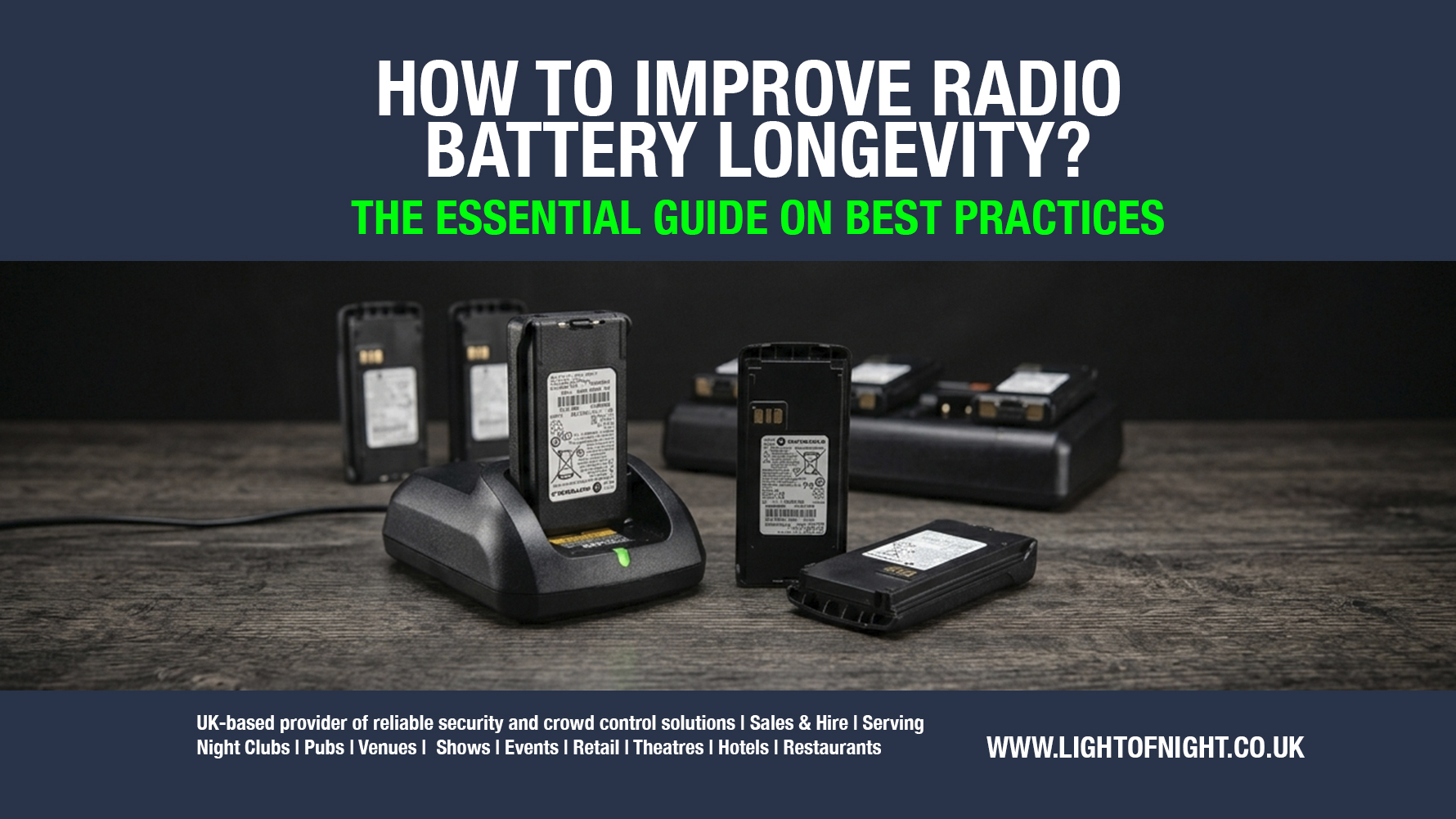
In venue security and event management, two-way radios are the lifeline of your operation. When an incident occurs or a crowd control issue arises, communication needs to be instant. But even the most rugged, high-end radio is only as reliable as the battery powering it.
Improper charging and storage are the single biggest causes of premature battery failure. This doesn’t just mean unnecessary equipment costs; it means the safety risk of a dead radio right in the middle of a shift.
By implementing these professional maintenance habits, you can significantly extend your radio batteries’ lifecycle, boost performance, and protect your investment.
1. Daily Charging Best Practices
How your team handles their daily charging routine dictates how many months (or years) you get out of your battery packs. Keep these core rules in mind:
- Turn the Radio Off: Always power down your radio before sliding it into the cradle. Leaving it on causes the radio to continuously draw current while charging. This confuses the charger’s internal circuitry, which can result in incomplete charging cycles and shortened lifespans.
- Ditch the “Storage Stand” Habit: Avoid using your charging dock as a permanent desk stand when the radio is already full. Continuous trickle charging (or “top-up” charging) on standard chargers slowly degrades the battery’s chemical health, permanently lowering its capacity.
- Avoid Deep Discharges: Modern Lithium-ion (Li-ion) batteries don’t suffer from the old “memory effect” of past tech. You do not need to drain them to 0% to keep them healthy. In fact, deep discharges stress the battery; it’s best to pop them on the charger when they drop to around 20–30%.
- Initialise New Batteries Properly: When unboxing a brand-new battery, it needs to be “initialised.” Leave it in the charger for an extra 1–2 hours after the indicator light turns green. This ensures all cells are perfectly balanced and reach their maximum potential capacity.
- Stick to the Right OEM Charger: Mismatched or cheap, third-party “bargain” chargers are a major risk. They lack proper voltage regulation, which can lead to overheating, cell damage, and even potential fire hazards. Always use official chargers designed for your exact radio model.
2. Off-Season & Fleet Storage Rules
If you manage a large fleet, a major portion of your inventory likely sits idle during seasonal downtime. How you store those batteries determines whether they will actually turn on when you next need them.
- The 50% Rule: Never store a battery completely full or completely empty for long periods. If you are taking a battery out of service for more than 30 days, ensure it sits at roughly 50% capacity to keep its internal chemistry stable.
- Control the Temperature: Extreme temperatures are the ultimate enemy of battery lifespan. Store your equipment in a cool, dry environment—ideally between 15°C and 25°C. Avoid damp basements, freezing storage units, or hot vehicles, which can cause permanent capacity loss.
- Keep the Contacts Clean: Over time, the metal battery terminals accumulate oxidation, dust, and natural skin oils from handling. This buildup acts as an insulator, resisting power transfer. Periodically wipe down the contacts on both the battery and the radio with a clean, dry microfiber cloth.
- Rotate Your Inventory: Don’t let the same half of your fleet do 100% of the heavy lifting while the other half sits in a box for two years. Use a simple spreadsheet or a label maker to log and rotate your battery inventory, ensuring equal wear across the board.
3. Four Red Flags: When to Replace
Even with flawless maintenance, chemical batteries are consumable items that will eventually degrade. Keep a close eye out for these clear warning signs that a battery is a liability and needs to be retired:
- Rapid Drain: The battery goes from a full charge to flashing red within just a fraction of its normal shift duration.
- Physical Deformation: Any noticeable swelling, bulging, or cracking on the plastic battery casing. Remove these from service immediately as they pose a safety hazard.
- Excessive Heat: The battery becomes uncomfortably hot to the touch during normal operation or standard charging cycles.
- Inconsistent Power: The radio cuts out or restarts unexpectedly, even though the screen indicates there is plenty of charge left.
Pro Maintenance at a Glance
Print out this quick reference guide for your radio room or equipment lockers to keep your team aligned:
| What to Do | What to Avoid |
| Do turn off the radio completely before charging. | Don’t leave fully charged batteries in docks indefinitely. |
| Do swap out batteries when they hit 20-30% capacity. | Don’t charge or store gear in extreme heat or freezing cold. |
| Do store long-term inventory at roughly 50% charge. | Don’t cut corners with non-genuine, third-party chargers. |
| Do clean the metal terminals with a dry cloth regularly. | Don’t ignore a battery that feels hot or looks swollen. |
Optimise Your Communications Fleet Today
Maintaining a large fleet of two-way radios requires the right hardware and support. If you are noticing rapid battery drain across your team or need help sourcing genuine, professional-grade replacements and smart chargers, we can help.
If you need a new replacement battery – check this link
[Contact the Light of Night team today to discuss your radio fleet requirements.]